Plant-Rich Europe:
A Joint Path for Retailers and Society
A shift toward more plant‑rich diets is one of the most powerful levers available to cut greenhouse gas emissions, reduce biodiversity loss and improve population health. It also represents a commercial opportunity for supermarkets to build supply-chain resilience, drive category growth to meet consumer demand, and achieve corporate sustainability goals.




This shift will not happen without firm commitments, accountability and action from the retail sector.
We ask all supermarkets across Europe to:
Measure
Start measuring their ratio of plant- to animal-source food sales using a recognised methodology.
Disclose
Publicly disclose the outcomes on an annual basis to create accountability and momentum.
Set Targets
Set targets to increase their percentage of plant-based sales aligned to the Planetary Health Diet trajectory.
Take Action
Implement ambitious individual and sector-wide actions to increase the ratio of plants in food sales.
Civil society organisations across Europe who have endorsed the Call to Action.










%20-%20Myrtle%20Gregory.png)


%20-%20Gert%20Engelen.jpg)





















The ambition we need for a plant-rich Europe
By 2035, at least 60% of all foods sold should be plant-based to be aligned with a trajectory towards the EAT-Lancet Commission’s Planetary Health Diet. By 2050, this should rise to 75%.
Total plant-based food sales
As % of all supermarket food sales by weight
Plant-based food sales trajectory by 2035 for European supermarkets to meet Planetary Health Diet recommendations
At least 60% plant based by 2035
The main shift must occur within the protein-source and dairy food groups.
Protein-source food sales should be at least 33% plant-based by 2035. Sales within the dairy category should be no more than 29% of all foods by 2035.
Protein-source foods category
by 2035
33%
Plant-based proteins
Beans, lentils, peas, soy, nuts, seeds, meat alternatives
66%
Animal-based proteins
Meat, eggs, fish, shellfish
Dairy category
by 2035
No more than 29%* of overall sales
*measured as milk equivalent values
Why it matters
Moving towards plant-rich diets across Europe unlocks key impacts at scale:
Meet emissions and biodiversity goals
Adopting plant-rich diets is the single most effective intervention to reduce food system greenhouse gas emissions and is critical to reducing biodiversity loss.
Prevention of chronic disease
Plant-rich diets are associated with lower risk of cardiovascular disease, premature mortality, and type 2 diabetes, with huge savings for healthcare systems globally.
Commercial opportunity for retailers
Protein diversification captures sustained and growing consumer demand for healthy and planet-friendly food and builds supply chain resilience.
The EAT-Lancet Commission’s Planetary Health Diet shows that a diet optimised for human health would contain at least 75% plant-based foods by weight by 2050. If adopted as a whole and at scale, this diet could prevent 15 million premature deaths annually and reduce food-related emissions by 36% in 2050 compared to business-as-usual (Rockstrӧm et al 2025).
Retailers play a crucial role in shaping our food choices, with unique decision-making power over product ranges, pricing, promotion and placement — all of which affect whether sustainable choices are available, accessible, affordable, and appealing for consumers. For retailers, protein diversification is a unique opportunity for commercial growth, builds on consumer demand for healthy and sustainable food, is essential for meeting net zero targets, and responds to increasing governmental interest in healthy food sales.
Progress is already rapid. Two-thirds of the biggest supermarkets in Europe now acknowledge their role in shifting towards plant-rich diets, and half of these have set measurable near-term protein split targets (Superlist Environment Europe 2026). When retailers set clear, science‑based targets aligned with the Planetary Health Diet and disclose their progress, the whole retail sector can systematically track and steer its sales toward healthier, more sustainable options.
We can now look ahead to mainstreaming uptake across the European retail sector. Civil society groups stand by to support this leadership by getting behind a clear collective ask. By working together, we send a unified signal about what good looks like and accelerate the shift toward food environments that support both human health and the natural systems on which we depend.
Retailers should adopt an established independent measurement methodology and follow its guidance, definitions and scope in full.
The scope of measurement should include processed and composite foods, with a commitment to progressive improvement in ingredient-level data over time.
Current established methods:
The Protein Tracker
Retailers should measure, report and set targets for the whole assortment. Calculations are based on protein content across the whole assortment and additional retailer insight can be gained by looking at data for Plant-based and Animal Core categories.
Planet-Based Diets Retailer Methodology
Retailers should measure, report and set targets against, at minimum, Food Groups 1 and 2, with an optional whole assortment target. Calculations are based on weight of plant- versus animal-based ingredients across food groups.
Targets should be set for 2035 at the latest. The 2035 and 2050 ratio figures in this document provide general ambition level guidance based on the Planetary Health Diet. Appropriate corporate target numbers are expected to differ depending on local context. The extent and pace of change should reflect this level of aspiration, and may be more ambitious where possible.
The ‘all foods’ ratio figure (60% by 2035 and 75% by 2050) can be applied to either measurement methodology — the numbers are expected to be broadly comparable whether measuring on a weight basis using the Planet-Based Diets Retailer Methodology, or on a protein content basis using The Protein Tracker (see Appendix 1).
Appendices
Our recommendations are based on the EAT-Lancet Commission on healthy, sustainable and just food systems (Rockstrӧm et al 2025), the world’s most comprehensive global scientific evaluation of food systems to date, drawing on advice from more than 70 leading experts from 35+ countries. We have used figures from the Commission's Planetary Health Diet (PHD), which models optimal nutritional outcomes for diverse populations, recommending that a minimum of, on average, 75% of our diet by weight should be composed of plant-based foods by 2050. This includes plant-based protein sources such as legumes and nuts, as well as fibre-rich fruit and vegetables and whole grains. Within the overall dietary shift required, specific attention must be paid to the protein-source foods (as defined in the glossary) and dairy.

The EAT-Lancet Commission’s PHD recommendations are optimised for improving human health outcomes, offering ranges of recommended amounts of different food groups that allow for flexibility to accommodate diverse and culturally relevant dietary choices. While the PHD is optimised for nutrition outcomes, its adoption also offers climate, biodiversity, water use, pollution reduction, and other environmental benefits, as well as reducing the number of animals farmed for food. A growing body of other research — including WRI and WWF’s own modelling — substantiates the importance of shifting to more plant-rich diets and reducing consumption of meat and dairy for fostering equitable food security, meeting climate goals, and halting deforestation and biodiversity loss (IPCC 2019; Searchinger et al. 2019; UNEP 2021). This transition is particularly important in high-consuming regions.
For simplicity, the Planetary Health Diet recommended intake target values by weight for each food group (rather than the lower/upper bounds of the ranges or the ‘adjusted for preferences’ values) were used to calculate the amounts presented here. Figures for milestones towards 2050 are based on linear trajectories of foods towards 2050 from a 2020 baseline. This results in a projected value of 60% plant-based for all foods by 2035, and 33% plant-based for protein-source foods specifically, while dairy (as milk equivalent) should be no more than 29% of total food consumption by 2035. This is not the only possible trajectory, and we anticipate that some countries or retailers should adopt more ambitious plant-based growth pathways. A full table of milestone projections can be found in Appendix 2. Retailers should also make a firm commitment towards meeting the full plant:animal ratio of the Planetary Health Diet by 2050.
We recommend that figures for ‘all foods’ can be applied to retail monitoring methodologies that measure food sales either by weight or by protein content. This recommendation is based on estimating the shares of plant-based and animal-based foods included in the EAT-Lancet PHD, carried out both at the level of food groups (by weight) and based on protein content:
- For food groups, the respective shares were derived directly from the PHD composition.
- For protein content, protein values were estimated using data from the GENuS and FAO Databases. Within the GENuS Database, weighted average protein values per 100g were calculated for the food groups “legumes” and “tree nuts and peanuts.” The weighting was based on the relative availability of different varieties in the European food supply, calculated as production quantities plus imports minus exports for the year 2023 using FAOSTAT data (FAOSTAT 2026). These estimates yielded plant‑ and animal‑based protein shares that were broadly comparable to the corresponding shares of foods by weight.
This section sets out potential trajectories towards the Planetary Health Diet plant:animal ratio by 2050 for all foods, and for the protein-source foods. Protein-source foods should be prioritized for action regardless of measurement methodology. Additional guidance is given on dairy, which is an essential category for the required shift.
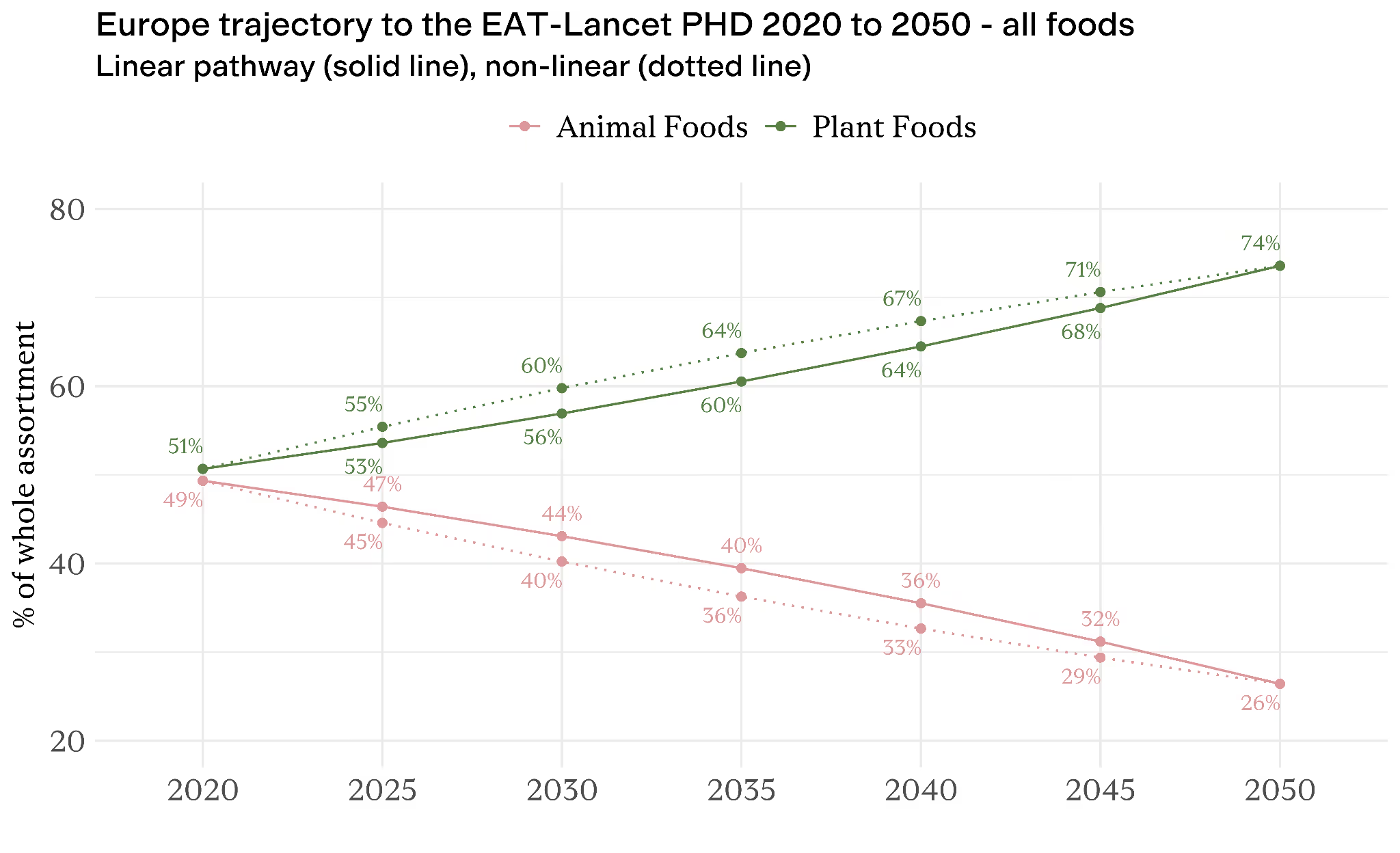
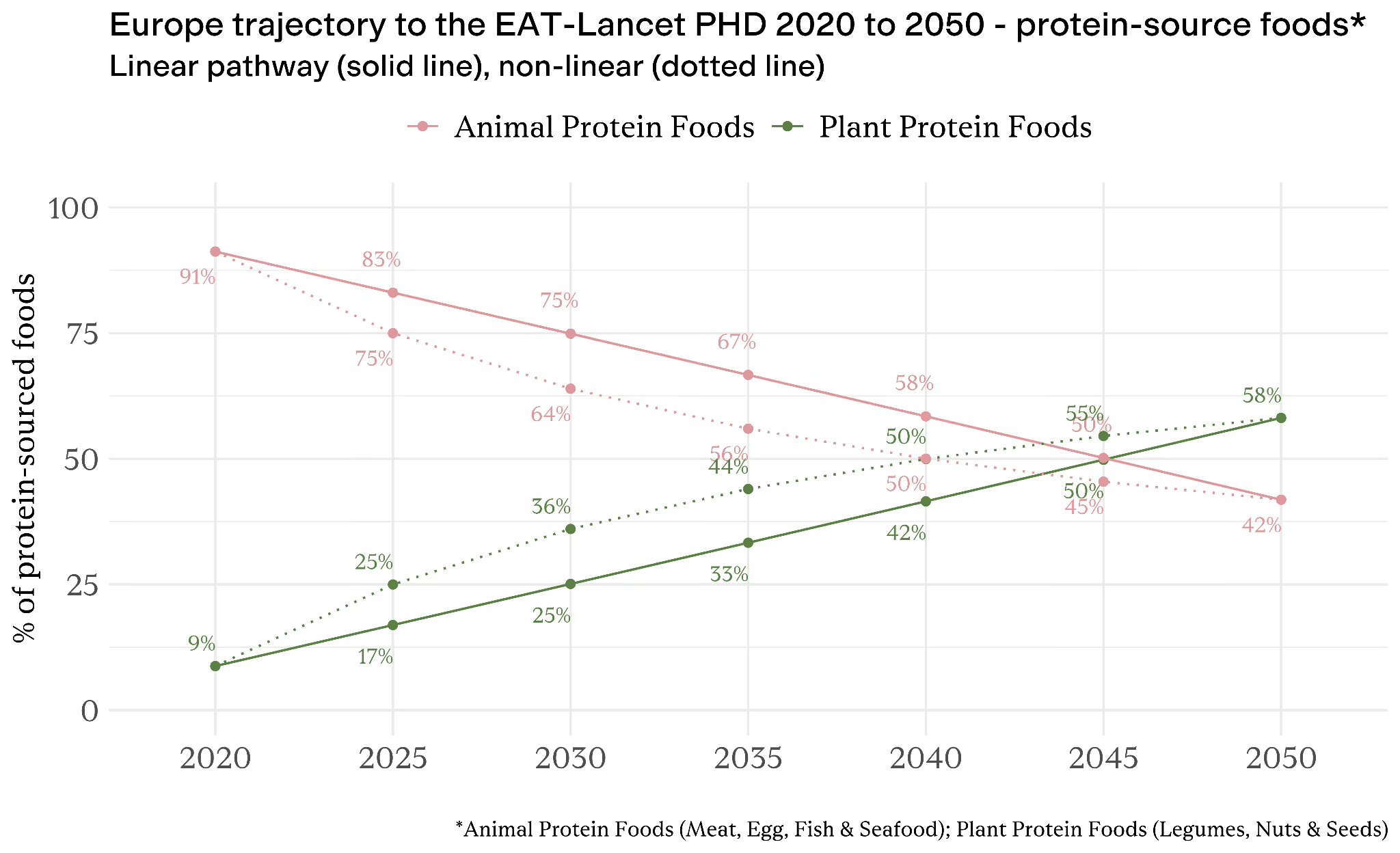
The solid line indicates linear trajectories from a 2020 baseline, while the dotted line indicates an even more ambitious curved trajectory. These figures can be used to guide retailer target setting.
These trajectories were calculated by comparing 2020 consumption data of each food group to the recommended value in 2050 according to the flexitarian version of the PHD for 39 European countries (downloaded from the Planetary health diets and their impacts dashboard). The linear trajectory was calculated based on adjusting food groups individually with even annual increases/decreases, while the non-linear trajectory adjusted the food groups based on logarithmic/exponential rates of change in increase/decrease. Country-specific values were weighted by projected population size from the UN population prospects data portal, then aggregated by year to create a weighted European average trajectory.
As a result of aggregating linear changes in individual food groups per country and weighting the results by projected population size (which both increase/decrease at different rates), the overall weighted average linear trajectory for Europe is not precisely linear.
Because these trajectories are based on the PHD, they reflect estimates based on the quantities of foods consumed across all settings. There may be differences in the proportion of plant- and animal-source foods that are sold in retail settings for intended home consumption versus those sold in food service settings for out-of-home consumption. There may also be some differences in the proportion of foods available at the retail level versus what is consumed, after accounting for food waste.
All foods:
Protein-source foods:
Dairy:
We have not defined a specific plant:animal ratio figure for dairy as there is currently no robust evidence base to support this. Instead, to be in line with the Planetary Health Diet, retailers should aim for total dairy food group sales to not exceed 29% of all food sales by 2035 (~19% by 2050), while maintaining transparency on plant versus animal shares. These figures are in alignment with EAT-Lancet Planetary Health Diet recommendations and the linear trajectory described above. Dairy % should be calculated as milk equivalent values for dairy food and drink, as a percentage of all foods.
Composite foods: Food products made up of multiple ingredients.
Fermentation-enabled products: Foods, ingredients, or functional additives created by cultivating microorganisms to produce, modify, or enhance protein-rich foods, specifically as alternatives to animal products.
Flexitarian: Flexitarian diets focus on whole plant-based foods and include low to moderate amounts of animal-source foods.
Food group: A category of foods that share similar nutritional properties. Each group typically contains foods that have common nutrients and contribute to a specific part of a balanced diet.
Milk equivalent: a standardised unit of measure used to express the quantity of a processed dairy product (like cheese, butter, or milk powder) in terms of the amount of raw, liquid milk required to produce it
Protein diversification: A strategic shift in food consumption and production to include a wider range of protein sources beyond animal source foods, towards the goal of healthy, sustainable food for all.
Protein split: Protein split is a metric that indicates the share of key plant-based vs animal-based foods or proteins sold. The metric is further defined within the two recognised methodologies, and may be applied across the whole assortment or within the context of specific food groups.
Protein-source foods: Plant-based or non-animal foods including beans, lentils, peas, soy, nuts, seeds and fungi; fermentation-enabled products and meat alternatives; as well as animal-based foods such as meat, fish and eggs. These foods, alongside dairy, are where the majority of the protein shift should take place.
Whole assortment: The maximum scope of food and drink products included under each respective method, representing relevant supermarket sales as fully as possible.
FAQ
The figures provided are based on a trajectory towards the consumption figures provided by the Eat-Lancet Commission Planetary Health Diet. We recognise that these figures are not a perfect proxy for supermarket sales figures, and that scope and calculation basis used in the established measurement methodologies may also differ from the Planetary Health Diet in some respects. However, our work shows that at this point in time, these figures provide the best possible basis for setting an ambition level on the urgent question of orienting supermarket sales towards healthy and sustainable plant-rich diets. Future research and methodological innovations may further improve alignment.
Retailers are advised to adopt an established independent measurement methodology and follow its guidance, definitions and scope in full. The numbers provided in this Call to Action should be used to calibrate ambition level for the targets set under these methods. Under the Planet-Based Diets Retailer Methodology, retailers should measure, report and set targets against, at minimum, Food Groups 1 and 2, with an optional whole assortment target. Under The Protein Tracker methodology, retailers should measure, report and set targets for the whole assortment. Calculations are based on protein content across the whole assortment. Our analysis shows that despite the difference in the unit of measurement (compared to the overall weight figures provided by Eat-Lancet), a target of 60% plant-based by 2035 at latest is still an appropriate and aligned ambition level - see Appendix 1 for further detail. Additional retailer insight into shifts in protein-source foods and dairy can be gained by looking at data for Plant-based and Animal Core categories.
To align with Planetary Health Diet food group values, the weight of animal-based dairy products and ingredients must be calculated on the basis of milk equivalent values. Milk equivalent is a standardised unit of measure used in the food sector to express the quantity of a processed dairy product (like cheese, butter, or milk powder) in terms of the amount of raw, liquid milk required to produce it. The milk equivalent value can vary based on the specific product in question, but as a rule of thumb, hard and soft cheese weights can be converted to milk equivalent using a ratio of 1:10, i.e. the milk equivalent value for 100g of cheese is 1kg of milk. For other dairy products such as yoghurt, cream, buttermilk, sour cream and kefir the ratio is roughly 1:1.
This therefore means that what may seem to be a relatively small weight of a dairy product like cheese (for example, a 25g serving) can translate into a high figure (250g milk equivalent) as a proportion of the overall diet when communicated as milk equivalent.
Further reasons why the relative share of dairy is high overall within the Planetary Health Diet include that milk is a heavy and regularly consumed item. For example a 240ml glass of milk would represent approximately three times the weight of a standard 80g serving of pasta. The reference value of 250g per person per day for the Planetary Health Diet is 19% of the total weight of all food groups.
For many retailers, protein split measurement and disclosure builds on data and reporting processes that are already in place for sales analysis and sustainability disclosures. 95% of the Dutch retail market and 75% of the UK retail market already publicly report their protein split.
Retailers are encouraged to start with the best data they have, often at food group or product level, and to improve granularity over time, rather than seeking perfect precision from the outset. The intention is not to add a new reporting burden, but to use existing data more strategically to inform commercial decisions and demonstrate progress on climate and nature goals. Over time the increasing use of AI in data analytics is expected to further simplify the measurement process.
While the EAT-Lancet Commission (2025) encourages the consumption of whole and minimally processed plant-based foods, it also acknowledges the role of a growing number of plant-based, fermentation-enabled, and cultivated alternatives to animal products. These products can offer considerable environmental benefits over conventional meat and dairy. The nutritional content of these products varies, with the healthier options being lower in saturated fats and sodium, and fortified with micronutrients. Retailers may consider supporting innovation in the development of alternative proteins, especially healthier options, to increase consumer options for plant-rich diets.
The two established methodologies define “all foods” slightly differently. When tracking progress toward the share of plant-based foods out of “all foods”, we recommend retailers use the maximum scope of food and drink products included in their respective methodology in order to represent relevant supermarket sales as fully as possible.
Yes, products consisting of multiple ingredients - or (‘composite products’) - such as ready meals, are included within the scope of the Call to Action. In line with the established methodologies, retailers are encouraged to use the best available data to measure these products initially, with a commitment to improving ingredient-level data resolution over time.
Both dairy products and protein-source foods (defined here as plant-based or non-animal foods including beans, lentils, peas, soy, nuts, seeds and fungi; fermentation-enabled products and meat alternatives; and animal-based foods such as meat, fish and eggs) are critical food groups in the shift to plant-rich diets.
There is clear environmental and nutritional evidence for setting a plant‑to‑animal ratio for protein‑source food sales. However, the same nutritional evidence base does not yet exist to define a robust plant‑to‑animal split within the dairy food group. Instead retail sales can be aligned with the Planetary Health Diet through a total reduction in dairy sales, rather than a specific plant‑to‑animal ratio for dairy and plant-based dairy alternatives. This metric reflects the need to limit total intake of dairy products to support population health and reduce environmental pressures. Nutrients commonly found in dairy products (e.g., protein, calcium) may also be secured from other dietary sources in an overall healthy diet.
The Plant-Rich Europe coalition aims to create a shared, Europe‑wide call to action for retailers to measure, disclose, set targets, and take action on the protein transition.
Different methodologies already exist to track progress toward more plant-rich diets and are being used in response to varying national contexts, retailer priorities and policy signals. The established methodologies highlighted reflect these different starting points. Both aim to support a shift towards more plant‑rich diets, but do so through different lenses and decision‑making frameworks.
Further details on how individual methodologies work are provided separately.
The 2035 milestone is derived from a linear trajectory tracking the minimum pace of changes needed to move the weighted average European diet from the 2020 baseline to the 2050 Planetary Health Diet target. Interim milestones are expected to differ depending on local context, where existing consumption levels (and the corresponding changes needed to reach the 2050 target) may be higher or lower than the European average. Retailers are invited to be more ambitious than the linear trajectory where possible.
We set out to establish a pathway that could guide retailers across Europe. Since current dietary patterns differ considerably across countries and regions within Europe, available “baseline” data from only a few retailers in select markets may not accurately reflect the baseline (and thus the corresponding changes needed) for other parts of Europe. Additionally, in some cases, existing retailer data is not yet available in a form that is directly comparable to the 2050 values from the Planetary Health Diet (for example, some retailers do not yet report dairy purchases in milk equivalent values). For these reasons, we used the most recent standardised data available for all European countries to calculate the weighted average European baseline and the trajectories from 2020 to 2050.
We call on retailers to increase the ratio of plant- to animal-source food sales to align with a healthy and sustainable dietary balance. Dietary change is complex, and there are different and complementary ways to assess progress toward more plant‐rich diets: across the whole food assortment or within specific food groups where change matters the most (protein-source foods and dairy). We therefore provide figures that account for these different scopes.
Improving farming practices is essential, and scaling up more nature‐positive and climate‐resilient agriculture is a critical part of the solution. However, a growing body of evidence shows that production‐side improvements alone will not be sufficient to meet climate, nature, and health goals at the scale and pace required.
In regions like Europe, with high consumption of animal‐source foods, reducing overall demand is critical to meeting these goals, alongside improving production. Shifting diets towards more plant‐rich foods frees up land currently used for feed and grazing, creating the conditions needed to scale lower‐input, nature‐positive farming systems which typically require more land than conventional systems. Additionally, without changes in what and how much we consume, efforts to improve farming risk being offset by continued demand growth.
For retailers, supporting a shift towards more plant‐rich diets - alongside responsible sourcing and supplier engagement - is a practical way to meet climate goals, accelerate land‐use reduction, strengthen supply‐chain resilience, and enable a broader transition to nature‐positive food systems.
Retailers have significant influence over food sales through their control of product offer, pricing, promotion, placement and presentation. Evidence shows that systematically applying these levers can drive sustained shifts in purchasing, while supporting category growth and supply-chain resilience.
Long-term trends also show that consumer demand for healthy, sustainable, plant-rich diets is resilient and projected to grow. By acting collectively, retailers can reduce risk, create clear market signals for suppliers and accelerate progress beyond individual efforts.
Government action can also help create an enabling policy environment through dietary guidance, public procurement, and transparency frameworks. But retailer action remains the most immediate and powerful lever for shaping day-to-day food environments.